
Thinking about building near Ovalo? A pretty piece of land can be exciting, but the wrong homesite can create costly surprises long before construction starts. If you want a property that fits your plans now and later, you need to look beyond the view and ask the right questions first. This guide will walk you through the biggest homesite factors to review in the Ovalo area so you can move forward with more clarity and confidence. Let’s dive in.
Ovalo is an unincorporated community in southeastern Taylor County, near Farm Road 614 and U.S. Highway 83. That matters because homesite decisions here are usually shaped less by city zoning and more by county subdivision rules, recorded restrictions, and utility feasibility.
Taylor County states that development in unincorporated areas is subject to its Subdivision Development Procedures and Regulations. If a tract outside a municipality is divided into two or more parts, a plat is required, and tracts inside a municipality’s ETJ also need municipal approval. The county also says it has no zoning authority in these areas and does not control deed restrictions or HOA or POA rules.
That means you should not assume you can build whatever you want just because a property is outside town. Before you get attached to a tract, confirm what has been recorded and what county requirements may affect the property.
One of the most important homesite questions is also one of the easiest to overlook: do you have clear legal access to a public road? A driveway or worn path is not enough by itself.
Texas A&M AgriLife defines landlocked property as land with no legal access to a public road. Its easements guidance also notes that easements can be express or implied and should be recorded in writing. In plain terms, you want proof of access, not assumptions.
Taylor County’s public records include deeds, warranty deeds, plats, deed restrictions, and other recorded documents. Those records are often where access rights, easements, and use limitations show up, so reviewing them early can help you avoid a major problem later.
If you plan to finance the land or start building soon, access issues can affect your timeline fast. This is one of the first items to verify before contract deadlines pass.
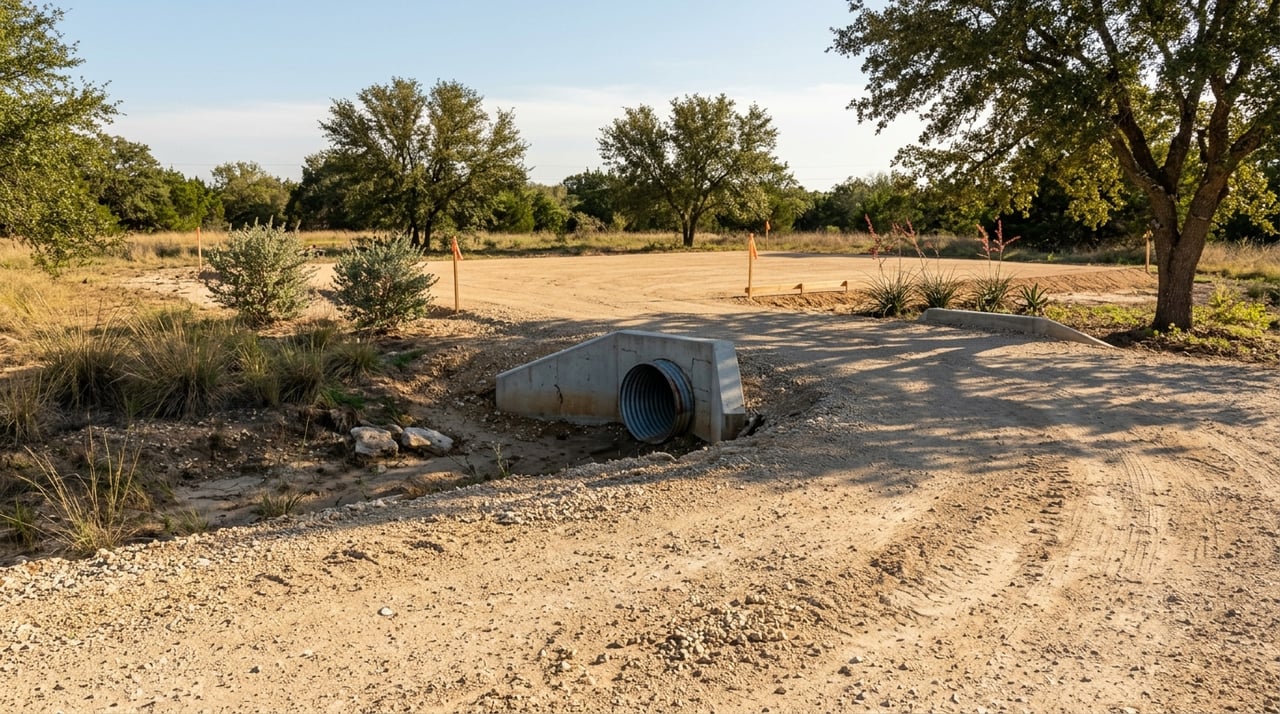
A homesite is more than a map pin. The actual ground conditions can affect septic feasibility, driveway costs, drainage, grading, and even where your house can sit on the property.
The Natural Resources Conservation Service says soil surveys can identify limits such as seasonal wetness, shallow depth to bedrock, and other site constraints. Soil information can help you screen a tract before you spend money on plans that may not fit the land.
Flood risk matters too. FEMA’s Flood Map Service Center is the official source for effective flood maps and address-based flood searches, so a tract should be checked by address or coordinates rather than judged by appearance alone.
Even in a rural setting, these details can shape your build budget in a big way. A tract that looks simple on the surface may need more site work than you expected.
The way your home sits on the lot can affect comfort, natural light, and utility costs. This often gets less attention during the land search, but it can make a difference once you move in.
The U.S. Department of Energy says south-facing windows admit the most winter sunlight, while east- and west-facing glazing can create more summer heat gain. That does not mean every house should be designed the same way, but it does mean lot orientation is worth discussing with your builder during the selection stage.
If two homesites seem similar, orientation may become a useful tie-breaker. The right placement can help with daylight, outdoor living, and how the home performs through the seasons.
Because Taylor County does not have zoning authority in unincorporated areas, neighboring land uses matter a lot. What is around you today may not tell the full story of what could happen later.
That is why recorded plats, deed restrictions, and nearby tract patterns deserve a close look. Since the county does not regulate deed restrictions or HOA or POA rules, buyers need to review recorded documents carefully rather than rely on verbal expectations.
If you hope to add a shop, barn, second dwelling, or split the property later, these details become even more important. A good homesite should support your long-term goals, not just your first set of plans.
Water should always be confirmed at the property level. It is not enough to hear that water is available somewhere in the broader Ovalo area.
The Texas Commission on Environmental Quality defines a public water system as one that supplies water for human consumption and serves at least 15 service connections or 25 individuals for at least 60 days each year. In Taylor County, the Texas Water Development Board shows multiple water user groups and county-other systems, and its Water Service Boundary Viewer can be used to check mapped service areas.
In practice, this means you should confirm whether the tract can be served, how service would be extended if needed, and whether your build plans align with what is actually available. Water questions are much easier to solve before closing than after.
If a homesite will need an on-site sewage facility, septic feasibility is a major part of due diligence. This is not something to push to the end of the process.
TCEQ states that permits and an approved plan are required to construct, alter, repair, extend, or operate an on-site sewage facility. It also advises homeowners to have a site evaluation performed in the area where they want the disposal field built before selecting a system.
Taylor County’s Development and Permitting page directs septic and floodplain questions to its Environmental Department. That makes early septic review a normal and important step for rural buyers in this area.
A tract can be beautiful and still be a poor fit if wastewater planning is difficult or expensive. Early answers help you avoid redesigns and delays.
Utility costs can change the real value of a homesite. If electric service needs to be extended a long distance, or if internet options are limited, your project budget and day-to-day experience may look different than expected.
Taylor Electric Cooperative serves the Abilene-area Big Country market and extends service under its line-extension policy. It also says fiber is being built in parts of its service area based on interest and existing infrastructure.
That means you should ask direct questions about current electric availability, line-extension expectations, and possible internet options before you move forward. For many buyers, these are not small details. They are lifestyle issues.
When you compare homesites, do not stop at the purchase price. Ongoing carrying costs matter too, especially on larger rural tracts.
Taylor County directs property tax questions to the Central Appraisal District of Taylor County. Taylor CAD explains that all taxable property is appraised there, and rural buyers should ask whether a tract is appraised at market value or under a special productivity or agricultural use.
Taylor CAD’s 2024 mass appraisal report says agricultural land may be taxed on productivity value after application, with a May 1 filing deadline and a possible 60-day extension for good cause. The report also notes that eligibility can change with ownership changes or loss of qualifying use.
If you are choosing between multiple properties, tax treatment can have a real effect on your long-term budget. It is worth understanding before you buy, not after the first bill arrives.
When you are excited about a homesite, it is easy to jump ahead to house plans and finishes. A better approach is to move in a practical order so major issues show up early.
A strong sequence for Ovalo-area land is to verify access and plat status, order title and survey review, check flood and soils, confirm water and septic feasibility, and then keep your builder and lender aligned with those findings before deadlines expire. That sequence fits the guidance reflected in county, utility, soil, flood, and wastewater sources.
This kind of step-by-step review can save you time, money, and frustration. It also gives you a clearer picture of which tract truly fits your goals.
The best homesite near Ovalo is not always the one with the prettiest first impression. It is the one that supports your build, your budget, your access needs, and your future plans with fewer surprises.
If you are weighing acreage, comparing tracts, or trying to understand what is really buildable in the Ovalo area, local guidance can make the process much easier. The team at Kristen Kyker is here to help you look at land with a practical eye and a long-term plan.

Who you work with matters! When it comes to your real estate needs, you should work with the best. Whether it is buying, selling, renting, second homes, investing, or more, we are happy to help assist you in any way that we can.

2500 S Willis St Abilene, TX 79605