
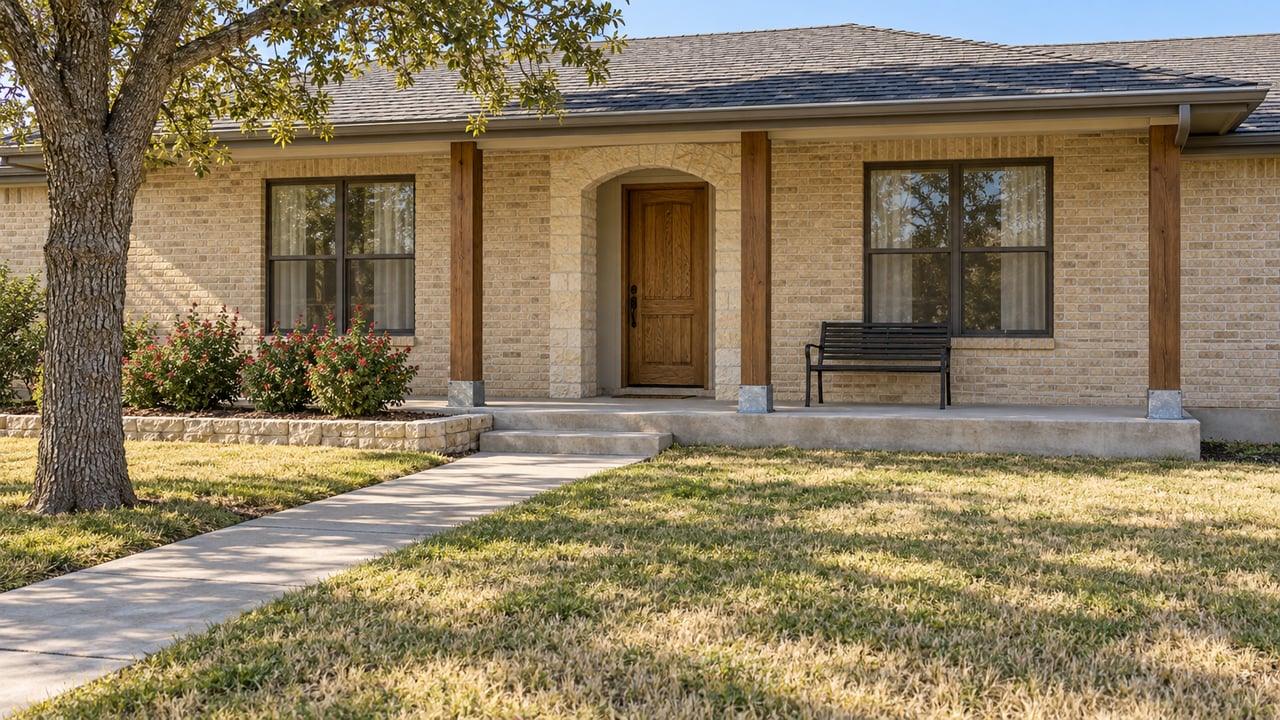
On the second Thursday of each month at 7:00 p.m., the Buffalo Gap Town Council meets at Town Hall, 709 Litel Street. That meeting handles the usual town business. Under an ordinance passed in October 2025, it is also the place where a new fence, a backyard shed, a garage addition or a new house gets its permit, and later the certificate that allows anyone to use it.
That comes from Ordinance 011-2025, which the council passed on October 9, 2025. Its title spells out that it is "authorizing the Town Council to issue permits." Buying an older house on a big lot near the Old Settlers Grounds with plans for a workshop is common enough. So is putting a family on a vacant lot. In both cases the schedule for what comes after closing is set by a body that meets 12 times a year. Plan your timeline, your contractor and your move-in date around that.
Under the new ordinance, a building is more than a house. The full text of Ordinance 011-2025 defines it this way:
"Building includes, but is not limited to, any fence, awning, canopy, shed, garage, house, tent, trailer, or other structure whatsoever within the Town."
The ordinance says no one may "construct or significantly alter any structure within the Town without first obtaining a permit from the Town." Under that definition, building any new structure needs a permit, from a perimeter fence to a carport awning to a storage shed. For changes to an existing structure, the line is specific. "Significantly alter" means changing a structure's footprint by more than 300 square feet.
For a buyer, the 300-square-foot line is a useful yardstick. A covered back porch or a modest bedroom addition may land near it. An attached two-car garage or a large primary-suite addition will likely pass it. Ask Town Hall which side of the line your project falls on before the plan gets drawn, not after the slab is poured.
The application is available at Town Hall. It carries a $50 nonrefundable fee, and blueprints or other acceptable documents showing the planned work have to come with it. The council may also ask for more documents to show the work fits the Town Zoning Ordinance and other applicable rules.
The ordinance gives two clear reasons for denial. An application can be denied for missing documentation. It can also be denied if the council finds the work does not comply with zoning or other applicable rules. A thin application costs more than $50. It can cost a month.
One part of the ordinance changes how a buyer should look at a vacant lot or a property that has sat unused. Anyone doing new construction, or a substantial alteration or repair, must show the council that the structure is connected to town water and sewer. If it is not connected, the applicant must show a written agreement to pay the Town's cost of connecting water and sewer to the property.
That makes the connection question part of the land price. A lot already served by town water and sewer is a different purchase from a lot that needs both run to it. In the second case, the buyer takes on that cost to get a permit. Before you make an offer on bare land inside town limits, call Town Hall at 325-572-3347 and ask whether the parcel is connected and how the Town figures the cost if it is not. The utility rules themselves are in the Town's Utility Ordinance and Utility Rate Ordinance, both posted on the Buffalo Gap ordinance register.
Many towns send their own inspector. Buffalo Gap's ordinance puts that duty on the person doing the work. The owner gets inspections "at appropriate times" from a building inspector or a Texas-licensed contractor they hire. That person certifies the work meets the International Residential Code for homes or the International Building Code for nonresidential structures. The certificates go to the Town Council when the work is finished.
Then comes the step that sets a move-in date. No structure, residential or commercial, may be "occupied or otherwise used for its intended purpose" until the council finds enough proof that it meets code and issues a Certificate of Occupancy.
Here is the order of events for a new home or a major addition:
Steps 3 and 6 both go through the council. Under the posted second-Thursday schedule, the next regular meetings after this post fall on November 12 and December 10. A family that closes on a lot in late November and wants to start building can count backward from those dates. So can a builder who promises a finish date in the spring.
The ordinance has teeth. The council can post or mail a written stop-work order when work violates the ordinance. Building without a required permit is a misdemeanor with fines up to $500 per violation, and each day counts as a separate offense.
Ordinance 011-2025 capped a busy two years at Town Hall. Buffalo Gap already had a zoning ordinance in December 2023, when council minutes recorded an amendment that moved building provisions out of the "current" zoning ordinance and into a stand-alone building ordinance. Over the next 22 months, the council adopted a run of land-use rules:
| Adopted | Ordinance | What it covers |
|---|---|---|
| Dec. 14, 2023 | 012-2023 | Building Ordinance |
| May 9, 2024 | 002-2024 | Subdivision Ordinance |
| July 10, 2025 | 002-2025 | Zoning Ordinance |
| Aug. 14, 2025 | 004-2025 | Zoning Board of Adjustment |
| Sept. 11, 2025 | 007-2025 | Fees for zoning requests |
| Sept. 12, 2025 | 005-2025, 006-2025 | Rezoning 101 and 109 East Street to fully commercial |
| Oct. 9, 2025 | 011-2025 | Building permit procedures |
The July 10, 2025 council agenda shows why the permit process lands on the council itself. That night the council held a public hearing on a proposed zoning amendment to eliminate the Planning and Zoning Commission. It also took up "procedures for handling zoning and building permit applications and other Planning and Zoning Commission functions." Three months later, the permit ordinance put that authority with the council.
For a buyer, the timeline means a zoning ordinance, a board that hears zoning requests, a fee schedule for those requests and a permit process all apply to one parcel. The two East Street rezonings show that a parcel's zoning can change by ordinance after a public hearing. Ask about the current zoning of any lot you are considering, and of the lots next to it.
Buyers bring plans to a Buffalo Gap purchase. Sellers get questions about what a buyer can do with the place. The permit ordinance touches both sides:
None of this needs to slow a good purchase down. It belongs in the plan from the first showing, next to the inspection period and the closing date.
This post is general information about published town rules. It is not legal, tax or financial advice, so please confirm the requirements for your own property with Buffalo Gap Town Hall and the right professional.
If you're looking at a lot or a house in Buffalo Gap with plans to build, add on or fence it in, The Kristen Dressen Kyker Team can help you map the purchase timeline around the council calendar from the start. Contact us, and we'll walk through the property and your plans together.
Who you work with matters! When it comes to your real estate needs, you should work with the best. Whether it is buying, selling, renting, second homes, investing, or more, we are happy to help assist you in any way that we can.

2500 S Willis St Abilene, TX 79605